Monday, November 3, 2008


Going for the Gold

Story and Photos by: FÜSUN ATALAY ~ Copyright © 2004


More desirable is sound health than all the gold in the world.
— Turkish proverb —


Symbol of great purity and value — and probably the first pure metal known to man — gold has been highly valued from the earliest times. The alchemists’ symbol, a circle with a dot in the centre, indicated that gold was compared to the sun and called the solar metal not only for its colour, value and beauty, but also for its innate healing powers for a number of ailments.

Archeological digs which go as far back as 4,500 years ago indicate that gold was used extensively in amazing dental work performed by Egyptian dentists. Romans commonly used gold salves for the treatment of skin ulcers. The shaman or curandro (the medicine man) of the American Indians also relied on the powers of gold for a multitude of purposes, by boiling a gold nugget in water and making the patients drink this potion to cure diseases, the foremost among which was mental illness.

Evidence of the ancient belief in the restorative power of gold is also found in China, where ancient medical journals record the effectiveness of gold — in powdered or pill form — in treating boils, epilepsy, mental disorders and palpitations of the heart.

But the earliest reference to the use of gold with reference to arthritis is found in medieval Europe, where alchemists mixed powdered gold into drinks to comfort sore limbs.
• • •


Exotic as it sounds, gold, in modern medicine, has been used for years as one of the standard treatments for rheumatoid arthritis.

Many experts — including Dr. Proton Rahman, a rheumatologist with the faculty of medicine at Memorial University and the Health Care Corp. of St. John’s — consider this precious metal to be among the most effective drugs to reduce the inflammation in the joints and decrease the usual symptoms of pain, swelling and stiffness.

“It is used in the treatment of rheumatoid arthritis — where there is a real indication for gold,” says Rahman.

The other indications for intra-muscular gold is palindromic rheumatism and, occasionally, in Still’s disease.

The cause of rheumatoid arthritis is not known, however, “a lot of genetic studies in the United States and U.K. have found evidence pointing to rheumatoid arthritis having a strong genetic component,” notes Rahman.

Although it is common among the general population, Rahman points to this strong genetic component as a possible explanation for the higher frequency of rheumatoid arthritis on the west coast of Newfoundland.

“This is likely as a result of a founder effect, as it is reasonable to assume that the population in the west coast is relatively homogeneous as it has arisen from a limited number of founders.”

The “founder effect” refers to the gene pool in a population whose ancestors have come from a very few countries. Settlers in Newfoundland were immigrants from Ireland and South West England. Consequently, diseases that are abundant today are the ones that were common among the original Irish and British settlers on the west coast.

Since there is no cure for rheumatoid arthritis, therapy is aimed at controlling the symptoms of the disease. Various treatments are applied to relieve the pain, reduce inflammation, prevent damage to joints, prevent deformities and keep joints mobile and functioning properly. It is not proven that therapy can stop the basic disease process, but it can slow it down and relieve the immediate symptoms of the disease.

There are two classes of medications used in the treatment of rheumatic arthritis: fast-acting “first-line drugs” and slow-acting “second-line drugs.” Acetylsalicylate (aspirin), naproxen, ibuprofen (Advil, Motrin) and corticosteroids (cortisone), which doctors consider first-line drugs, are used primarily to reduce pain and inflammation.

Rheumatoid arthritis, however, requires more than these non-steroidal anti-inflammatory drugs, known as NSAIDs (pronounced “en-saids”).

While the NSAIDs and corticosteroids can relieve joint inflammation and pain, they do not actually prevent joint destruction and deformities. Treatment, with other than first-line drugs to stop progressive damage to cartilage, bone and adjacent lining tissues, is needed for effective management of the disease.

These “second line” drugs are referred to as disease-modifying anti-rheumatic drugs, or DMARDs. Although they promote disease remission and prevent progressive joint destruction, DMARDs, such as methotrexate, hydroxychloroquine (Plaquenil) and gold, are not anti-inflammatory agents. Therefore, in some cases they may have to be used in combination with first-line drugs.

Many people may not be familiar with the gold treatment, which has been effective for controlling some types of arthritis and related diseases. As a compound, gold is taken in tablets or given as intra-muscular injections initially on a weekly basis. Treatment can then continue for months or even years.

“Rheumatoid arthritis is an autoimmune disease that causes the immune system to over function which, in turn, attacks its own joints to cause inflammation and swelling in the joints,” Rahman explains. “DMARDs modify the immune system so that it is more regulated in the hopes that the disease will not be as active.”

Who would be a good candidate for the gold treatment?

Rahman’s professional assessment is, “a patient with rheumatoid arthritis who has a contraindication showing that he or she cannot receive methotrexate, a first-line DMARD, may be a good candidate for the gold treatment under the supervising of the specialist.”
• • •


Injectable gold salts (Myochrysine, Solganal) have been used to treat rheumatoid arthritis for more than 60 years, while oral gold Auranofin (Ridaura) was introduced in the 1980s.

Gold treatment appears to work best in the early stages of rheumatoid arthritis, and may also be effective in people with active joint pain and swelling. It does not cure the disease; nor does it correct or repair existing deformities.


However, Rahman agrees that gold treatment is a good alternative for effective therapy. Ten to 15 per cent of his patients with rheumatoid arthritis receive or are being considered for gold therapy.

Dr. Trisha Macnair, medical adviser to the BBC News health website, emphasizes that people need to be patient to see an effect from gold injections. It often takes three to six months to determine whether a person is getting benefits from gold salts. She points out that while “gold does tackle the inflammation, it is not a pain-killer and, therefore, most people should continue taking their other medications such as aspirin or NSAIDs.”

Intra-muscular gold injections are usually administered once a week initially for six months or longer. In patients who have a good response, the medication usually can be tapered to once a month. Routinely, a test dose is given first to rule out allergy, as some may have severe reactions to gold. Gold tablets, on the other hand, are taken once or twice daily.

In addition to its benefits — oral as well as injectable — gold can also cause a variety of side effects which may mean that treatment has to be stopped. Problems with the blood, kidney or skin; mouth ulcers, altered taste, sore throat, fever, bruising, bleeding and breathlessness are all common side effects.

The treating physician should look out for any sign of a skin rash, mouth sores, kidney damage with leakage of protein in the urine, and bone marrow damage with anemia and low white cell count. Patients receiving gold treatment are also regularly monitored with blood and urine tests.
• • •


Despite certain drawbacks, most arthritis specialists still view gold salt injections as an important form of treatment for rheumatoid arthritis. Research carried out over the last three decades have shown that this form of treatment is effective, and in some sufferers it even may slow down damage to the joints.

A small group of people with rheumatoid arthritis experience dramatic and long-lasting improvement on gold. The Cochrane Group is a well-established body that reviews many treatment methods. Their most recent study of the effectiveness of injectable gold in treating rheumatoid arthritis — dated Jan. 27, 2004 — found a 30 per cent improvement in the number of swollen joints when gold was used. Their report concluded that, “Although its use can be limited by the incidence of serious toxicity, injectable gold has a clinically important and statistically significant benefit in the short-term treatment of patients with rheumatoid arthritis.”

Like with many diseases, living and coping with arthritis is not easy. And although it is not a curable ailment, its progression may be slowed and the pain caused by it somewhat alleviated.

A person with rheumatoid arthritis should do his research and then ask his doctor informed questions about the types of treatments and available options. Once a patient has done this, he or she may have taken the first step in the direction of a better quality of life.


~~~~~~~~~~~~

A Toast to Olives !

Olive Trees by Vincent Van Gogh


Story and Photos by: FÜSUN ATALAY Copyright © 2006


Although the initial image olives conjure up may be a martini cocktail, olives are widely used as ingredients for many different culinary creations like tapenades, sausages, breads; and for more adventurous endeavors such as chocolates and ice cream, made with olive oil.

A typical breakfast of my childhood in Turkey consisted of feta, rose petal jam, crusty bread, tea and a bowl of shimmering, meaty olives cured in olive oil. My mother used olive oil for all her cooking because she said olive oil was healthier than butter or margarine, and it was good for our skin.

Olive trees have been around since ancient times. Their fruit has been used as a source of food and oil, and their branches have been recognized as a peace symbol. In her book, A Modern Herbal, first published in 1931 Maude Grieve states that "... in Scriptural and classical writings the oil is mentioned as a symbol of goodness and purity, and the tree as representing peace and happiness." Besides its wide use in diet, the oil of the oil was burnt in the lamps of sacred temples while the leaves of the olive tree crowned the victors in Olympic games.

It’s not known for certain when olives were first cultivated for harvesting; however, they are now grown in the Mediterranean region, Australia, California and New Zealand. In the Mediterranean region olives are consumed as part of a stable diet as well as a relish, and are used to flavor foods.

My mother was unaware of the scientific reasons for the many benefits of olive oil. She was merely passing on the wisdom of generations of mothers. Today we know that olives are packed with monounsaturated, "good", fat. Ten medium black olives have 50 calories and 4 grams of fat. Green olives are pickled before they are ripened; black olives are pickled after they are ripened. They are pickled or cured with water, brine, oil, salt or lye. The cured olives may be consumed as a relish, stuffed with pimentos, anchovies, almonds, or used in breads, main dishes and salads.

The seed of the olive is also endowed with a non-drying, edible oil with a distinct flavor used in salads and cooking. Although there are various grades of this oil, the finest is the extra virgin olive oil, obtained by cold pressing the seeds without the use of chemical solvents or heat. With less than one percent acidity, it is a delicate, fragrant, greenish oil that should be stored tightly sealed, in a cool place, away from light.

"An olive-oil rich diet is more effective than a low-fat diet in controlling and treating obesity," says Dr. Frank Sacks, Professor of Cardiovascular Disease Prevention, Harvard School of Public Health in Boston. " Moreover, it leads to longer-lasting weight loss and it is easier to keep, because it tastes good."

Numerous scientific studies have confirmed that olive oil, due to its high antioxidant factor, is a healthy dietary fat free of cholesterol and high in mono-unsaturated fat. Regular consumption has shown to have a protective effect against risk of some cancers, arthritis, cardiovascular disease and stroke by raising the HDL (good cholesterol) and lowering the LDL (bad cholesterol). However, one should keep in mind that it is still 100 percent fat with 120 calories per tablespoon, so olive oil should be used to replace other fats, not in addition to them.

Finer restaurants have replaced their pre-appetizer bread and butter with bread and dipping oil, as more diners ask for olive oil in their diets. Olive oils infused with herbs, or flavored with fruits and vegetables are easily found in specialty food stores. Shops, like Food for Thought, carry a large variety of olive oils.

There are many kinds of olives as there are olive oils on the market. Olives come in cans, jars, or open olive bins. Supermarkets like Sobey's and Dominion as well as specialty stores offer olive bars with global varieties from around the world which you can mix, or buy in small quantities at a time to test which kind you like the best. Here are the names of a few different types to get to know these precious drupes a little better.

Arbequina (small brown) and Empeltre (medium black) are table olives also valued for their high quality oils.
Kalamata olives, named for a city in Greece, are large and black with smooth skin and meaty flesh.
Manzanilla or Spanish olives are the most available in supermarkets. They're usually pitted and stuffed with pimento and are most often used for martinis.
Niçoise, purplish-black olives, have a distinctive sour flavor that works well in a tapenade and can be substituted by Kalamata olives.

Souri (Syrian) olives are aromatic in flavor and give a high oil yield.

Olive Martini

1 oz dry gin
1 oz sweet vermouth
1 oz olive brine
Pour the dry gin, sweet vermouth and olive brine into a cocktail shaker half-filled with ice cubes. Shake well, strain into a chilled martini glass, and serve.
Niçoise Salad
One of the great classics of Provençal cuisine, Niçoise salad can be found on almost every menu in sunny Nice.
8 small new potatoes
450 grams fresh green beans, parboiled
250 grams mixed salad greens
1 can water-packed artichoke hearts, drained
6 cherry tomatoes, cut in half
3 hard boiled eggs, halved
½ cup black (Niçoise) olives
1 (170 gram) can tuna packed in water
Vinaigrette:
3 Tbsp wine vinegar
2 tsp Dijon mustard
1 garlic clove, smashed with salt to form a paste
Pepper to taste
½ cup extra virgin olive oil

In a bowl, whisk together vinegar, mustard, garlic paste, and pepper. Add olive oil while whisking constantly. Arrange salad decoratively on a platter. Drizzle with the dressing.
Serves 2-3
Olive Bread
This is a savory quick bread that is as good with a cup of tea as it is with a bowl soup.

2 large eggs
1 ½ cup coarsely chopped, well-drained green, pimiento stuffed olives
3 Tbsp olive oil, plus additional oil for brushing the pan
1 cup all purpose flour
1 cup multi grain or wholewheat flour
1 Tbsp flax seeds
1 Tbsp sugar
2 tsp baking powder
1/4 tsp salt
½ cup milk
In a bowl, beat the eggs until they are frothy and stir in the olives and 3 Tbsp of the olive oil. Into this bowl, sift together the flour, baking powder and salt. Add milk and stir the mixture until it is just combined.
Brush a 4 ½ inch by 8 ½ inch pan with the additional oil. Transfer batter into the pan and bake in the middle of a preheated 350 degree oven for one hour. Let bread cool in pan for 10 minutes and turn unto a rack. Makes 1 loaf.

Tapenade
250 grams pitted mixed olives
1 ½ Tbsp anchovy paste (or 2 filets)
1 small clove garlic, crushed
2 tablespoons capers
2 to 3 fresh basil leaves
1 Tbsp freshly squeezed lemon juice
2 Tbsp extra-virgin olive oil
Rinse olives in cool water, drain and pat dry. Place rest of the ingredients in the bowl of a food processor and process until the mixture becomes a coarse paste. Stop to scrape down the sides of the bowl once or twice. Transfer to a serving bowl, drizzle with a little olive oil and serve on crackers or crusty baguette slices. Refrigerate left-over tapenade to use within two weeks.
~~~~~~~~
Copyrighted Material ~ Copyright © 2006 All Rights belong to Füsun Atalay
Sunday, October 12, 2008

Sunday, September 7, 2008


Precious Jams

Text and Photos © Copyright by Füsun Atalay 2005


Alas, in a few more weeks summer, with all its glory, will be a pleasant memory. With a little effort and know how, seasonal fruits can be turned into home-made jams for breakfast or tea time to last through the winter. Especially with the increase in the number of 'pick your own fruit' farms, making jam at home has become a real possibility for everyone.

Making jam should not take much longer than a couple of hours of preparation followed by the rituals of stirring, testing and tasting the concoction. Before starting, it’s important to remember a few golden rules of the art, to obtain a well-set jam with good keeping qualities.

Jam essentials

The difference between jam, jelly, marmalade, or preserve is not very complex, although the tastes and the textures may be.

Made from crushed or chopped fruits and sugar, jam not only holds its shape, but it’s also less firm than jelly. Jams made from a mixture of fruits, especially when they include citrus fruits, nuts, raisins, or coconut, are often called conserves.

Preserves are made of small, whole fruits such as cherries and gooseberries, or uniform-sized pieces of fruits such as apricots or pears in a clear, thick, slightly jellied syrup.

Finally, marmalades are soft fruit jellies with small pieces of citrus peel or fruit suspended evenly in a transparent jelly.

Jam session

Essential ingredients of successful jams and jellies are the right combination of fruit, pectin, acid and sugar . The choice of fruit gives color and flavor; supplies the liquid required to dissolve the sugar; and provides some or all of the pectin and the acid needed.

Pectin is found in fruits, concentrated in their skins and cores. Sour plums, Concord grapes, gooseberries, quinces, red currants and cranberries are high in pectin; apricots, blueberries, cherries, peaches, rhubarb and strawberries are low. Pectin, in the right combination with the sugar and the acid, causes fruits to form a gel.

Additional pectin, called for in many recipes, is available commercially either in powdered or liquid form which are not interchangeable. Powdered pectin is mixed with the unheated fruit or juice. Liquid pectin is added to the cooked fruit and sugar mixture immediately after it’s removed from the heat.

Use fully-ripe fruit because you can make up for the deficiency in pectin by using commercial pectin; but you cannot make up for the flavor of ripened fruit.

Sugar serves as a preserving agent, contributes flavor, and helps in gelling. It’s important not to reduce the amount of sugar in traditional recipes. Too little sugar prevents gelling and allows yeasts and molds to grow in the product.

Freezer jams differ from regular jams as the former are not boiled. Boiling is a step for sterilizing and killing harmful microorganisms which may be present. For safe freezer jams, it’s important to keep everything clean during preparation and to store the jams in the freezer instead of a shelf or a cold room.

Freezer jams also require the addition of commercial fruit pectin to set, as their natural pectin is not activated by heat. Since different brands of pectin are not interchangeable, it’s important to follow the exact ingredient quantities and directions specified in the recipes from the manufacturer of the brand you’re using.

Label freezer jams with a date in case they get buried in the freezer or refrigerator. For safety and best quality store in the refrigerator for 3 weeks or in the freezer for up to one year.

Once thawed, freezer jams should be kept in the refrigerator and used within three weeks.

Quince Marmalade

1-1/4 kg quince (about 4 large)
1-1/2 kg granulated sugar
5 cups water
2 Tbsp lemon juice

Wash, seed and quarter quinces. Grate coarsely ( food processor works well). Place water and fruit in a pot; boil for 5 minutes. Add sugar, stir until it dissolves. Turn heat down and simmer 4 to 6 hours until the marmalade thickens and color turns crimson. Stir in lemon juice, bring to boil and turn off heat. Cool completely. Ladle into sterile jars. Keep in a cool, dry place.

Fresh Blueberry Jam

Source: Certo Pectin

1-1/2 qt. fresh blueberries, crush to equal 4-1/2 cups.
2 Tbsp lemon juice
7 cups sugar
2 pouches Certo fruit pectin
1 tsp butter
12 (8 oz.) sterilized jars with lids

Prepare 8 oz. jam jars by boiling them for 10 minutes. Prepare fruit in large 5-quart pan on stove. Stir sugar into fruit. Mix well and add 1 teaspoon butter. Bring mix to full bubbling mix for 5 minutes over high heat; stir constantly.

Pour Certo (2 pouches) into fruit and continue to boil for 1 minute, stirring constantly. Remove from heat and skim off foam. Ladle into jars, wipe rims of jam. Turn jars upside down for 5 minutes and then turn upright. Let set for 1 hour.

Copyrighted Material ~ Copyright © 2005 ~ All Rights belong to Füsun Atalay

Friday, August 8, 2008

A healing Nature

Füsun Atalay © 2008


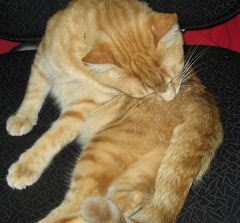
I'm now a full- fledged empty nester since my son and daughter have flown the coop to seek their fortunes around the world and my husband has decided to follow his, with another woman. So, since last January, Beowulf, my cat has been my sole companion through the long, cold and seemingly eternal winter.


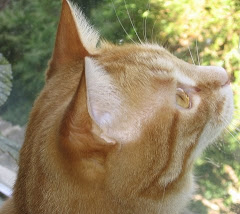
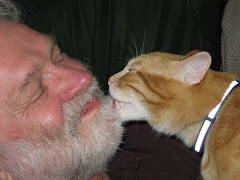
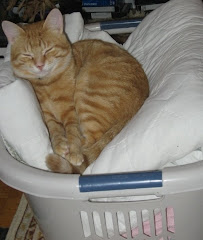
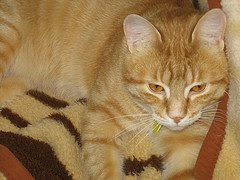
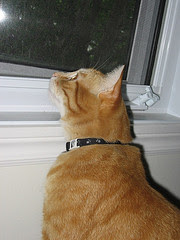
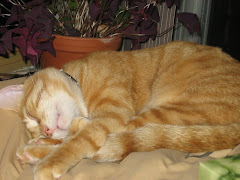
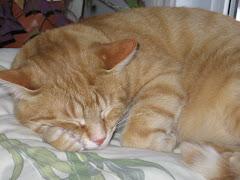
Despite his name, Beowulf is a very friendly and affectionate domestic tiger who sleeps at the foot of my bed and lies on guard at the door whenever I take my showers. Pets, nevertheless, are a different kind of 'children' to whom we divert all our affections in the absence of our own.


I ponder on Khalil Gibran's words:

“Your children are not your children.
They are the sons and daughters of Life's longing for itself.
They come through you but not from you,
And though they are with you yet they belong not to you.”


Naturally, there comes that time in life to let our children fulfill Life's longing for itself. If we have done a fairly good job in raising them, they'll come back to us and to the unconditional love we carry for them.


A life partner's departure, on the other hand, is not as readily acceptable- especially when there's no rhyme or reason any poet or philosopher can explain. So we call such events mid-life crisis, marital-breakdown or downright betrayal.


I was getting tired of living as a betrayed wife when Life presented me with its will to go on through nature. The jasmine-scented mock orange blossoms outside the front door, the heady perfume of lilacs in the backyard, the greening of new grass made me realize that life goes on and I have to keep pace.


Last Sunday I found a dazed, young bird at my doorstep. It couldn't fly in spite of desperate attempts. I knew that it would be fair game for the neighborhood cats and took him in. Since I don’t have a bird cage - I placed him in Beowulf's pet taxi― the carrying case we use when Beowulf goes to his veterinary visits. I gave him water, flax and sesame seeds, a few grapes and a furry toy.


Nursing a fragile, helpless creature back to health with loving words and soothing music, as well as nourishment and care evoke nostalgic feelings in me. I don't know much about birds, but searching on the Internet, I discovered that this was a baby starling with a black mark on his bill (as opposed to pink) indicating that he is a male. Beowulf and I decided to name our battered guest, Billy


Beowulf was joyous and curious like a toddler who just got a baby brother ; and wanted to play with him immediately. I had to be watchful that he didn't topple the pet taxi or reach in too far with his claws and harm Billy. Yet watching his feline curiosity and the wonder on his face, the futile attempts of his cat reasoning, his question-laden "meow"s brought me much laughter and amusement -something I haven't had for a while.

When I met my husband, he was like Billy: lost, battered and ruffled, albeit not by flying into a wall but by its equivalent in human terms. During our life together he did find love, happiness, trust; and regained his self-confidence and self-esteem through my unconditional love and nurturing. Once he could hold up his head and put a past he hid from me behind, he didn't seem to need me any more and took off leaving behind a few feathers ― souvenirs of his existence. This is not the way it was supposed to be, but life doesn’t always turn out the way we plan and hope it will.


Letting Bill, the love of my life, go has been very painful and difficult.


Letting Billy, the bird, go should be easier. I'll take care of him until he too heals, and then I'll set him free into his own world and mingle with his peers among the mulberry branches or feast on the ripening fruits in my backyard. I've always had a spot for birds, because for me birds symbolize not only a delicate vulnerability, but also a much coveted freedom and soaring of the spirit.


My Father used to call me 'Saint Füsun of Brossard' after Saint Francis of Assisi, the patron Saint of birds, for I always leave food out for them in winter and summer.

Birds can ascend in a heartbeat and command a 'bird's eye' view of life; they see what I cannot. They are beautiful, fragile, sing joyful songs and soothe my soul. But they are vulnerable in spite of their free, independent, restless spirits. They give without knowing : the mulberry tree whose fruits and tall beauty I enjoy from the window when I write at my desk is a gift from the birds- a seed dropped right there from a bill- and that grew into a tree bearing edible fruit ! So is the grapevine that has been growing along the fence and whose leaves I have harvested many times to make delicious wine leaves stuffed with rice, pine nuts, cinnamon and mint.


* * * * * *


Billy regained his health last Friday. I could almost taste his yearning to try his wings again and discover the blue skies. Beowulf, during this time had turned from a feline with hunter instincts into a protective older brother. Or maybe he made me believe that because I never left the two unsupervised. In any case, it was time to let go ― once more...


With Beowulf following my every step, I carried the pet taxi to the back yard and opened the metal grid door. Billy paused briefly. Then, like a plane soaring into the vast skies, he took off and alighted on the tip of a pine branch where two larger starlings joined him immediately. Briefly after, all three flew into a glorious sunset, while Beowulf turned into a typical feline once again and dashed after them. But I knew he’d never catch up to them, and Billy would be fine now.


Billy is back !


Billy (the bird) is back! A day after I released it, I saw Beowulf and Al (an all- white street cat I named Al-short for Algarth) playing in the backyard. Now, these two usually hiss at each other, but this time they were behaving like two hockey players on the same team chasing after a puck ! Well, the puck turned out to be Billy, trying to hop to safety for his delicate life. I was thunderstruck ! I dropped everything (including a slipper) and stormed out. Beowulf had purposely turned deaf to my admonishments and raced me to the raspberry bush where Billy made one final hop and vanished among the leaves.

Instinct and desperation propelled me into the bushes groping for the battered creature. When I found it, his heart was racing with fear and its wing feathers were out of kilter. I felt terribly guilty for having released it prematurely, believing it would be alright. Perhaps I had acted out of my personal, wishful thinking rather than treading with reason. I could only pray that he would survive.

Billy has been recuperating ever since, and pecking at the mulberries I gather from the tree his ancestors bestowed in my yard. It has been a challenge to keep Beowulf away from his shelter; but these are the kind of challenges which bring me happiness.

There's rain in the night air and the International Fireworks have started. I hear their boom at a distance from my open window through which waft in floral fragrances from my Chinese neighbor's yard. Beowulf is back from his night's outing, getting ready for his deep slumber after chasing birds and butterflies all day. Billy is safe and slowly recovering. I feel I'm ready to retire myself with a book and some music until my eyelids feel heavy with sleep.

When I lay down my book and turn off the lights, I'll thank for all the things I have and say a prayer for the battered Billies of the world.

Not long ago, I was one of them.


Copyrighted material ! All rights belong to Füsun Atalay ~ Copyright © 2008

Sunday, July 27, 2008


Crossroads

Füsun Atalay © 2008 Copyright


Most people celebrate their wedding anniversaries with flowers, champagne, dinner and special gifts. I celebrated mine with a new car in exchange for the one whose lease was not up for yet another year.

Because my husband and I are in a divorce process since the beginning of the year, despite the gamut of emotions and grief I've lived through, I’ve been trying to accept reality for what it is. Thus, I decided to mark that special day we once celebrated like most loving couples do, in a very different manner this year.

The 2005 burgundy car was full of memories: Trips to the East Coast, driving through Atlantic Canada, boarding the Marine Atlantic ferry from North Sydney to Porte aux Basques, leaving the mainland behind, driving for hours on rugged Newfoundland terrain to reach our ‘other’ home in St John’s, chasing icebergs, puffins and whales... Countless trips to Grimsby, ON, to visit his ailing father and his brother and family who live in nearby Smithville. . . Millions of places in Montréal where we left our footprints and echoes of happy memories. . .


That's why I decided to part with the 2005 burgundy car before its lease was up.

As the saying goes, it’s always more difficult for the one left behind to cope with the memories, and silence the ghosts of a past shared with a person- especially when that person was so special and the center of my world.

Separation, brought on by betrayal is not as final as a separation brought on by mortality, although it is more painful than the latter. We had promised to love and cherish and remain faithful till death did us part, but he forgot his promises and betrayed my love and trust. Then he coldly packed up and exited out of my life, expecting me to do the same. After nine years of unconditional devotion to him, I how could I pretend as if I never existed, so I chose not to go gently into that (good) night.

I have been trying to move forward with my life, however; and the idea of parting with the car we shared seemed like a bitter-sweet move in that direction. Symbolism aside, I had to consider my budget and think in terms of my needs, now that I didn’t have to accommodate his height and comfort. Downsizing while I kept the options to which I was accustomed, would mean slightly lower monthly lease payments for me.

On the day of the exchange that would mark the start of a new anniversary, I made another stop by my bank where I keep a safety deposit box with a few pieces of jewelry I own. Among them is a beautiful Harem ring I had picked up during one of my travels to Turkey. It’s made of three gold bands embedded with emeralds, rubies, sapphires and diamonds on top. The bands are attached to each other at the base so that they stay together.

My wedding ring had become loose around my finger since the separation. Like most of my clothes, it was too large and practically falling off my ring finger. It was time to put another reminder to rest. I placed my wedding and engagement rings into the safety box and retrieved my Harem ring which fit perfectly. As I placed it on the ring finger of my left hand, I made a wish - that its elegant and courtly beauty may be a daily reminder of brighter days in store.

Then I drove to pick up my new car. It was already on the dealer’s lot, bright and shiny, ready and waiting for its new owner Me ! That was a happy yet pausing moment, but the pause didn’t last long. I pulled up right beside my new car, and snapped a souvenir photo of the two next to each other the Past and the Future.

I've been accepting that I cannot live in the past. As life continues unfolding forward, I have no choice but to keep pace with it and turn towards the light as the sunflower turns towards its god throughout the day. The steps may be small at first, but like one learning to walk again after a major shock that paralyzed my limbs, I am determined to walk again and move on - one small step at a time.

My new car has already been instrumental in reinforcing this important realization. I've always driven cars with manual shift which allow me the freedom to change gears, down shift or stop on a dime, if necessary.

I am now into the first gear of my new journey. It doesn’t take long to shift into the second gear, but I'm in no hurry accelerate. Yet, I’m also looking forward to moving into the second, third, fourth and fifth gears as I advance on life’s uncharted roads; slowing occasionally to imbibe the scenery: the hills and the valleys; the flowers and the cloud formations; and be grateful for what I have as I move on further away from a past that was not meant to be a future - for me.
Füsun Atalay © 2008 Copyrighted material ~ All Rights belong to Füsun Atalay

Thursday, June 12, 2008


The Hungry Man
a short story
by
Füsun Atalay Copyright © 2001


Nicole always felt uncomfortable when a beggar approached her . It was not that she minded giving whatever little change she carried with her, but it was rather the thought that there were people in the world who had to beg in order to eat their next meal which troubled her the most.

It was she who felt embarrassed as she handed a loony or the few quarters she carried in her pockets. Her friends called her a pushover betting that those who begged for money were probably richer than herself, or they were alcoholics who would just continue being one as long as gullible people like her supported them.

Nicole was torn; she did not like seeing people ask for spare change for food. On the other hand, she did not like the idea that she might be supporting someone's ruinous habit. Many times she had told herself that the next time someone asked her for spare change, she was going to say "No", but so far she had not been successful. She always gave the others the benefit of the doubt, and reasoned to herself that anyone who could muster up the courage to ask for change must have really needed it. After all, it must have been so humiliating to ask for money to buy food .

"How blessed I am to have a roof over my head and food on my table," she thought to herself, and always wondered what twist of fate or circumstance had brought people to beg.


Nicole was not rich herself, but she felt she was fortunate to have a steady employment and as long as she was frugal with her earnings, she would be alright. Her prudence won over the impulse to spend much time in the malls where she knew she might be tempted to buy items that she really did not need. She limited her shopping to what was on the lists she made before hand ; and was seen at the mall only during the seasonal clothing sales to replenish the aging pieces in her wardrobe.

She had one weakness, though : Good food.

The marketplace came alive with bursting flowers of every imaginable colour and beauty in March. Tulips, hyacinths, primroses and narcissus heralded the spring and Easter as early as late February. They were followed by flowers to mark Mothers' Day in May. Roses, azaleas, gardenias, hibiscus, carnations, terracotta arrangements of exotic cacti were the only ones she could identify.

In early June nursery boxes of violets and begonias; cosmos and impatients; marigolds and petunias were spread out as far as the eye could see. That was Nicole's favourite time, for it meant only the beginning of months of wholesome celebration of the bounty she felt she was blessed with.

Sometimes she went to the market not to buy anything, but just to watch the interaction among the people and the merchants. There was Gaetan, the fat butcher who always whispered a tune as he wrapped up meat in brown paper and weighed it. He had a habit of winking at pretty young women when his wife did not work in the shop.

Mrs Gaetan (Nicole did not know her name) was a character in her own right. Her flame red hair was always coiffed, with every strand glued in place with hair spray. She managed to keep her nails long and polished; and her waistline firm and thin. During the weekends, when she was in the shop, there was no question of who was the boss. Her presence would turn Gaetan into a silent, serious, and subservient man. He resembled more of a pigeon than a parrot on those occasions.

Nicole also loved to feast her eyes on the colourful arrangement of shiny apples, juicy grapes, spotless bananas; green zucchini, firm tomatoes, carrots, green and red peppers; fresh herbs, cartons of white or brown eggs, jars of honey and homemade preserves. There was everything at her market.

A bakery second to none, a fine food store that carried unique delicacies from all over the world, a cheese store with over a hundred kinds of cheese, butchers, and a coffee mill where she bought her coffee beans always freshly roasted. These simple pleasures were her bliss, her celebration of life. And when she felt so happy and blessed herself, how could she say "No," to someone whose only request from her was a little money because he had not eaten for a whole day?

One Saturday Nicole arranged to meet her friend Maria at the market bakery around noon to enjoy a cappuccino and chat for a while before they picked up a few items they needed. Maria had not been to the market for quite a long time and she was not aware of the metamorphosis it had gone through in the last three years.

Nicole arrived there a little earlier and parked her car. It was a sunny day and the sun melted most of the January snow . Even the birds, in their chants, were rejoicing the early spring feeling in the air . Nicole decided to stroll to the North end of the market towards the bakery which she had suggested as their meeting place.


She smiled as she passed by some of the merchants whom she had gotten to know so well by sight. They were her nameless friends who greeted her every time she went there and answered her questions about herbs or different types of honey . "It is the little joys that are so precious; yet we take so for granted in life," thought Nicole as she took the steps up leading to the bakery.

They should have named that place The Bee Hive instead of the First Harvest , since it was always bustling with people buying crusty loaves, and buttery croissants and pastries whose names were not even easy to pronounce let alone remember. Nicole knew that by three o'clock most of this bounty would be depleted down to the last mille feuille or the slightly crooked baguette which was not selected when there were so many better looking ones.

Just then her eyes met those of an elderly man who looked like he might be in his sixties or seventies. Nicole had never been good at guessing people's age. He approached her as if he were about to ask a question. He was fairly clean dressed except for a tattered, hand knitted blue and brown striped scarf that he had wrapped twice around his neck. He had possibly a day's stubble on his long, sombre face.


He put out his palm and asked, "Can you spare some change , miss? I haven't eaten since yesterday and I am hungry."

Nicole, who thought that he might have asked her a direction or perhaps the time was caught off guard by this request. A woman and a man, excusing themselves, hurriedly passed between them. The elderly man did not look like a vagabond but his blue eyes did have a hollow, hungry look in them.


"How can I say "No" standing in front of these fantastically tempting breads and cakes?" thought Nicole. Then, just as these thoughts were passing through her mind, another idea flashed through her.

"If you haven't eaten, how would you like to pick something from here and let me buy it for you?" she asked. At least this way she would be sure that the man would eat, and not drink her money.


He seemed astonished at first, as one would be at catching a sizable fish no sooner than he had cast his rod. Then he looked overwhelmed at the choices that were arrayed in the glass display in front of him. Danish pastries with glistening fruit fillings, lemon cakes, butter tarts, fruit pies, assorted sandwiches - the choice was enormous, but he was not picky.

"Something like that would be nice," he said pointing to a raspberry filled Danish pastry glazed with apricot jam. "And a coffee. Two milks and two sweeteners."

Nicole repeated the order to the young girl who asked if she had been served yet,and then turned around to the man to ask him if he wanted anything else. He had already seated himself on a chair at one of the round, glass topped cast iron tables and was fishing something out of the breast pocket of his worn-down jacket. He took out a pill box filled with blue, white and pink tablets and capsules. Pointing to it he announced, oblivious of other people, "I have to take nine of these every day. For my heart. I had two operations in the last two years."

Nicole was moved, but she did not know what to say. She had given change to beggars in the past and thought no more about it. The act was impersonal, innocuous, unattached to emotions. This time she felt herself taken into a stranger's confidence and exposed into his dismal world. It was an uncomfortable feeling most easily dealt by avoidance. Every time she handed a coin to an outstretched hand, was she in fact not asserting silently, "Here take this, and leave me alone. Spare me the details of your pathetic life"?


She hoped she was doing the right thing by following her instincts. She picked the tray with the coffee and the pastry, paid the girl who rang up the total, left the change next to the Styrofoam cup, and brought the food to the hungry man . "Enjoy it," she smiled. He looked happy and thanked her reiterating that he had eaten nothing since yesterday.

At that moment Nicole remembered Maria who was supposed to be there any minute. It would be better if her friend knew nothing about this little episode.


"Well, take care and have a nice day," she said and parted, feeling awkward, from the elderly man who waved his free hand as he was sipping his steaming hot coffee and looked as if he were, at that moment, in heaven.

Nicole started walking towards the cheese store at the opposite end so that she could make her way back to the bakery and make it look like she had just arrived herself. Her eye caught Maria's back as the latter entered the ladies' room. Good. She was there. Nicole would wait a few minutes before she returned to the bakery.

She stepped into the nuts and dry fruits store to check the price of shelled walnuts for the coffee cake she was planning to bake . When she emerged with her little bag of walnuts, raisins and dates she saw that Maria was waiting at the entrance of the First Harvest , looking rather awed by all that was spread before her. Nicole hoped that the old man had finished his coffee and was gone. Maria who had seen her by now waved her hand and started walking hurriedly towards Nicole.

They greeted each other with a hug.

"I had a bit of a problem leaving Richie with my mom. He doesn't want to let go of me lately. Have you been waiting long? "

Nicole could not lie. "No, just long enough to buy some nuts and raisins," she replied. "So, how about our coffee before we check out all the other stores?"

"No, not just yet," Maria pulled her to the opposite direction from the First Harvest. "There is a man there who is asking for money from the people. I already said no, so I don't wanna see him again. Let's wait until he goes away."

But it was too late, Nicole spotted the man whom she had treated to coffee and Danish a while ago. He was coming out of the shop now, and he saw her too. He flashed her a big smile as he rubbed his stomach in a circular fashion with his right hand trying to communicate that her treat had hit the spot. He looked thankful. Nicole felt embarrassed, she gave him a quick nod of acknowledgement and hoped her friend did not see the exchange.

"Really," Maria was continuing, "it really bugs me to be asked for spare change by people. Why don't they get a job and work like everyone else instead of begging?"


Nicole knew if she told Maria what had happened, Maria might laugh and say something like, "That's typically you, the champion of the underdog. I wonder how many coffees and cakes he's had before you came along today."

Nicole would rather have done what she did than chance a man go hungry. So, she chose not to argue and replied, "I wonder. I wish I knew the answer. Yet, I don't know what is worse: helping them momentarily or simply ignoring them . But I certainly wouldn't want to be in a position where I had to beg in order to eat."

"You? Beg?" Maria stopped momentarily, enunciating each word and stared at Nicole as if the other were kidding. "Oh, don't be silly! You'll never beg. Let's go and get some lunch before the coffee; I am absolutely starved!" Maria's voice chimed. As she slid her arm into Nicole's, the latter could not help wondering where that poor man's next meal would come from. Then she realized that just as she had never seen him before, she would probably not see him again . So, she tried to put the thought behind and not spoil the afternoon for Maria.


It turned out to be a very pleasant afternoon, especially for Maria who had a chance to get away from her house chores and motherhood duties for a while and spend a few leisurely hours with her friend.
. . . . . . .


Another lively spring had ushered a beautiful summer; and in time a colourful autumn bid welcome to the winter.


The market was always crowded around Christmas. Freshly cut pines, seasonal ornaments, fresh wreaths, cyclamens and flowering Christmas cacti made the place look like Santa's palace, if he had one. People rushed in and out of the shops, ordering their turkey, picking the perfect tree, drinking bowls of hot chocolate and simply savouring the season with its sights, sounds and the ambiance that could be felt only by being there.


Nicole thought of the few weeks in December as the climax of an entire year before life quietened down a bit at the market. The following couple of months would bring in a quieter pulse, a subdued tone as nature silently prepared for another spring, another summer and another harvest.

Nicole had taken her niece Amber to help pick out a small wreath for her apartment and treat her to a slice of cake at the First Harvest. The little girl was happy to be out with her aunt and in anticipation of the reward that was awaiting her, she was on her best behaviour. They bought some sweet potatoes and carrots; picked a bag of fresh cranberries and started walking to the flower shop to see their display.


Amber's eyes shone when she spotted the Santa Claus standing on the steps of the First Harvest, jiggling a long-handled bell and repeating , "Ho! Ho! Ho! Merry Christmas!" Then she spotted the colourful lollipops spread out on a square kerchief at his feet; and next to them was a tin box into which people were dropping coins. Those red, yellow, green, orange and purple lollipops looked rather appealing to Amber. She stopped her aunt and looked up at her with pleading eyes.


Oh, Aunt Nicole, can I buy a lollipop from Santa, phleeease?"

Nicole laughed at the child's innocence, but she did not want to burst her bubble. Amber had maybe another year before she started questioning the existence of Santa. "Alright, Sweetie, but just one." She fished out two - dollar coins from her pocket and handed them to the girl. "And put these into Santa's tin."

Amber darted towards the man dressed like Santa Claus and after depositing the coins ceremoniously into the coffee tin, she bent down to pick a candy. At first she reached out for the orange one, but she changed her mind and took the green. Just then, the red one looked more attractive than all the others, but she had already picked hers. . . and her aunt had said only one.

The man, stuffed into his Santa suit, was watching her. The white wig and the cotton beard that covered most of his face made it difficult to ascertain whether he was smiling or frowning. He must have seen her hesitation or read her thoughts. He let out a jolly laughter and said, "Go ahead, take another one. Ho! Ho! Ho! It's Christmas, after all."

"Thank you, Santa!" Amber did not want to pass up this opportunity by consulting her aunt whose word would not weigh as heavily as that of Santa's at that moment, anyway.

She quickly picked the red one on which she had set her eye, and was about to run back to her aunt standing at a distance, when the man dressed as Santa added so that Nicole could hear clearly,


"Just don't forget to leave a raspberry Danish and a cup of coff... errr , a glass of milk in the fireplace on Christmas eve!"


Copyrighted Material ~ Copyright © 2001 ~ All Rights belong to Füsun Atalay