Thursday, November 6, 2008


Bridges to Diamonds

A closer look at Prosthodontics

Füsun Atalay ~ Copyright © 1999


"You wanna take a PA of this, Suzanne, so we can see how the infected area looks?"

With this mysterious, professional lingo Dr. Michael Moscovitch, a veteran prosthodontist since 1978, disappears into the next room to attend to the other patient sprawled on the dreaded dentist’s chair.

He has been filing crooked teeth to fit them with straight, brilliant and durable porcelain caps which last a lifetime; building bridges to support missing teeth; polishing teeth discoloured from coffe or tobacco stains to cover them with a space age composites and or ceramics to improve the patient’s entire smile and self-concept.

The left corner of my lips begins to feel tingly and my upper lip starts ballooning into my cheek. X-rays and jaw impressions are taken so that the temporary bridge can be replaced by the permanent one containing porcelain. I learn later that PA or peri-apical radiograph simply means X-ray.

Welcome to the world of prosthodontics! The prosthodontist is not someone to frequent for a simple filling or a basic checkup unless s/he has been your dentist all along. He is a specialist in restoring natural teeth, creating and replacing dentures, implanting supported teeth, and building other prosthetic devices.

Dental prosthesis, like any other type of prosthesis is a reconstructive art of the damaged parts of the mouth, nose and the dentition, the tooth system including the number, kind and arrangement of teeth.. Unfortunately there is not much promotional literature on prostodontics.

"Prosthodontists are supported to a large extent by the profession itself. Other dentists will refer difficult cases to us, whereas general dentists are sought more directly by the public," says Dr. Michael Moscovitch of Westmount through his blue surgical mask as he peers into my gadget filled-mouth with his dentist’s binoculars.

Precision and state of the art procedures in rebuilding and replacing lost teeth with precious metals and ceramics are of utmost importance in this plush, third floor suite. One wall alone is covered with his gold-sealed diplomas and certifications from renowned universities such as Boston School of Dentistry, McGill University, Chicago Dental Society and Université de Montréal.

Dr. Moscovitch has been my dentist since 1982. He has aligned my overlapping cuspids to meet in a straight line, replaced two upper incisors with porcelain caps, and filled a few molars with blending alloys so that unsightly silver fillings do not sparkle when I laugh. Ironically, I lived some of my most relaxing moments on his modern, leather chair listening to Tchaikovsky’s "Winter Dreams" or Scriabin’s complete piano etudes which take the edge off the humming of the drills and the constant gurgling of the suction attachments.

Today I am here to have a faulty root canal work corrected. The root canal filling was done by a regular dentist during my financially lean teen years, and recently it started an infection in the gum. Unfortunately the bicuspid has to be extracted since it has a cap, and a bridge must be built to support a brand new porcelain tooth in its place.

I ask him if silver material is still used in fillings.


"In ordinary cases, dental amalgam has been a favoured material useful in restorative dentistry for posterior teeth where aesthetic requirements are a low priority," says Dr. Moscovitch voicing the current thoughts of the profession. "And restorations made from this material are durable, easy to place and relatively inexpensive."


I inquire what makes the process relatively inexpensive. "Because direct materials allow the tooth to be restored in one appointment, with no requirement for impression taking, temporisation, or laboratory procedures."


I learn that in Canada, medical devices and materials, including dental amalgam, a mixture of mercury, silver, copper and tin, are under the regulatory authority of the Health Protection Branch of Health Canada. The savings in time and cost to the patient associated with the direct technique are substantial. According to the report by the Canadian Dental Association the cost of a direct restoration, on average, is only about "one-quarter that of an indirect restoration".


More than 160 million dental amalgam restorations are placed in the teeth of North American dental patients each year. Dental amalgam, made by mixing a metal powder composed of silver, tin, and copper with liquid mercury, is still considered by many dentists to be the profession's most important restorative material. Two of the primary reasons for its success -- low cost and ease of placement -- are in large part attributable to its being a direct filling material.


An option to the compo-ionomers and composite resins is the recently-developed family of gallium alloys. Dental amalgam has been used in dentistry for over 150 years. However, although gallium alloys are mercury-free, in their present state of development they may not be a viable option as a substitute for dental amalgam. The excessive corrosion of the current gallium alloys may preclude their use as a suitable restorative material for permanent teeth.


These alloys are composed of a metal powder whose composition is very similar to that of conventional amalgam. The gallium alloys are direct metal restorative materials that are mixed, placed and carved in an almost identical manner as dental amalgam. They appear to have low toxicity, and are not considered to pose any more a threat to health than do other widely-accepted materials like composite resin, glass ionomer (GI) cements or dental amalgam do.


Hybrid glass ionomer cements and hybrid glass ionomer resins have been available to the dental profession since the late 1980's although very few clinical studies on hybrid glass-ionomer materials have been published.


Prosthodontics, however, is more aesthetics-oriented.. Therefore, direct materials, including hybrid GI cements, composite resins, and ceramics and composites, have the potential to be used successfully as alternatives to dental amalgam when the appearance is of paramount importance.


At its most glamorous, the world of dental reconstruction is where beautiful porcelain teeth and million-dollar smiles are created at a fraction of the cost of the diamond stud embedded into a perfect bicuspid. More often, however, the routine jobs are replacing teeth whether they are dentures, bridges or a single broken, useless tooth.


This is cosmetic and restorative dentistry which can enhance your smile through a unique combination of constantly developing trends such as dental implantation, CAD/CAM (computer aided design and manufacture, bonded ceramics and composites) and the passion of the prosthodontist in his quest for perfection in natural- looking reconstruction.


When your smile is attractive, dentists and patients agree that other benefits such as an improved self-image which encourages better dental hygiene and, ultimately, better overall oral health follows.


By the end of my two hour appointment, my lips are still frozen, but the smile reflected in the silver hand-mirror confirms that the last four visits, all the discomfort and the couple of grand I am about to sign away were worth it. I realize that with the small investment I have poured into my smile in the last twelve years, I could have bought a car, or taken a luxury cruise. However, I know that my sparkling smile and my self esteem will far outlive the memories of a cruise or the body of a brand new car.

THE VISIT

Copyright © Füsun Atalay


I feel his warm fingers
as they touch the corner of my lips
parting them skillfully.
Then the quick jab
that sends quivers through me.
My nails dig into my palms
in a tight fist
and I feel as if that moment
will stretch into eternity.
Beads of perspiration
line-up on my temples;
as he withdraws, I hear him say,
"That wasn’t so bad, was it?"
I am almost embarrassed
wondering if terror is etched
on my face
in brazen brush strokes
that divulge the story
of my foolish fears.
The blitz of customary sounds
of alto shrills, base drills
once again play the themes
of akin, familiar melodies-
and I surrender
to the growing numbness
that light the fires on my cheeks,
inviting my drowsy eye lids
to enter a world of dreams.
This is my moment in the sun:
to change the dreaded hour
into a few moments of fun.
It won’t the first time-
to indulge in make belief-
(On that reclining chair
I’ve written so many stories -
of my youth and endless dreams.)
Then his voice wakes me up
with a pat on my cheek,
"You’ll need another appointment for next week."
I nod in a daze- half asleep;
try to smile and garble
something that sounds like
"Hank - u"-
but, he knows what I mean
in spite of my frozen tongue
and dysfunctional, fat, upper lip.

~~~~~~~~~~~~~~~~~~~~~~~~~~~~~~~~~
All Rights belong to Füsun Atalay © 1999


Needlepoint was a Class on its own

~ an anecdote from my teaching life ~
Drawing & Photo
By:

Füsun Atalay ~ Copyright © 2004


Bringing humour to the classroom helps to deal with young people.

Before we realize it, the school year comes to a screeching halt each spring. Prior to the last day, there are the moments many of us haggard and worn-out teachers await. We cross out the days on the school calendar, subtracting the weekends and greeting each other with numbers.

"Only 20 more to go,"

"May's out, just 14 more teaching days,"

or

"This is the last Day 7 of the year," and so on.

But, as melancholic as I feel every year at that time - realizing that one more year from my life is spent, gone, lost forever - I dwell on the positive that it is summer and I will have six weeks to do something totally different and enriching which, hopefully, I will incorporate into my teaching come September.
Not a paid vacation

Summers are not a period of paid vacation for teachers as many people think. First of all, as irrelevant to this piece as it may be, our contracts are based on 10 months of teaching and the pay is stretched out to 12 months so that we don't starve while we are technically unemployed, yet do not qualify for employment-insurance benefits.

Many of us attend courses, catch up on our reading and writing, and attend to health issues to rejuvenate, recuperate and mend our mortal (and sometimes mental) wounds for another year of teaching and educating youth.

As adults, we do grow at an incredible rate of wear and tear - one of the increasing hazards of our profession - but as teachers we make up for that by staying young in spirit.
After all, not many professions outside of teaching get to spend the majority of their days with children and teens. Naturally, this closeness to young people year after year makes an accurate yardstick to note how the youth have changed over decades of teaching.
Humour makes a difference

I have come to acknowledge that what keeps me young and in charge of my sanity is the humour I bring into, and also observe, in my daily classroom situations.

When I retire, I hope to write a book based on my teaching anecdotes. Not only would it be a legacy to my son and daughter, but it might even make a good read for future teacher trainees.

As I look back on last year, many class memories return to me. Some are hilarious, others more subtle, and yet some are actual pearls of wisdom captured in memory.

Following is a recent anecdote, one which still makes me smile at its remembrance.

About 40 minutes into my needlepoint class, a sweet, red-haired, pixie-like girl got up from her chair and swooned over to my desk as if she were walking on clouds. She drawled, "Miss ...?"

I was helping another youngster untangle a giant knot she'd managed to tie with her metre-long yarn, so I couldn't answer the red-haired student right away. But, as soon as we untangled the messy knot, I turned to the red-haired girl.

"Yes. What were you going to ask?"

She paused for a few seconds and replied, "I forgot. It always happens to me."

I tried to jolt her memory.

"Did you lose your needle?"
"No, it's right here," she said, holding out her canvas with a half-embroidered Piglet design on it.

"Were you going to ask for a pair of scissors?" I continued.

"I don't think so," she replied.

"Yarn?"

"Nope."

Noticing the way she was shifting her weight from one foot to the other, I inquired, "You weren't going to ask to go to the washroom, were you?"

"Oh, yah ! . Can I go, please?"

Regretful that I might have planted an idea she didn't have before, I replied, "Hmmm. You couldn't have forgotten something like that. Your bladder would've reminded you."

The girl whose knot was just undone jumped in "Miss, she's an only child."

I was puzzled at first and could not make the connection. But I soon realized the failure in communication.

"No, b-l-a-d-d-e-r, not brother," I explained.

The red-haired was quick with a reply.

"I don't have one. I sh-wear," breaking the word into two syllables.

"Everyone has a bladder," I continued.

"Huh?" Brief pause. "What's that?"

"Well ... That's a little pouch which holds your ..."

Before I could complete my sentence, the red-haired girl stormed out of the room saying, "I can't wait to hold anything, Miss. I've got to go to the washroom."

So much for teaching life skills. Or vocabulary — for that matter.

Copyrighted Material. All Rights belong to Füsun Atalay Copyright © 2004
Submitted to 2007 PWAC Barbara Novak Humor Award Competition

Monday, November 3, 2008


Going for the Gold

Story and Photos by: FÜSUN ATALAY ~ Copyright © 2004


More desirable is sound health than all the gold in the world.
— Turkish proverb —


Symbol of great purity and value — and probably the first pure metal known to man — gold has been highly valued from the earliest times. The alchemists’ symbol, a circle with a dot in the centre, indicated that gold was compared to the sun and called the solar metal not only for its colour, value and beauty, but also for its innate healing powers for a number of ailments.

Archeological digs which go as far back as 4,500 years ago indicate that gold was used extensively in amazing dental work performed by Egyptian dentists. Romans commonly used gold salves for the treatment of skin ulcers. The shaman or curandro (the medicine man) of the American Indians also relied on the powers of gold for a multitude of purposes, by boiling a gold nugget in water and making the patients drink this potion to cure diseases, the foremost among which was mental illness.

Evidence of the ancient belief in the restorative power of gold is also found in China, where ancient medical journals record the effectiveness of gold — in powdered or pill form — in treating boils, epilepsy, mental disorders and palpitations of the heart.

But the earliest reference to the use of gold with reference to arthritis is found in medieval Europe, where alchemists mixed powdered gold into drinks to comfort sore limbs.
• • •


Exotic as it sounds, gold, in modern medicine, has been used for years as one of the standard treatments for rheumatoid arthritis.

Many experts — including Dr. Proton Rahman, a rheumatologist with the faculty of medicine at Memorial University and the Health Care Corp. of St. John’s — consider this precious metal to be among the most effective drugs to reduce the inflammation in the joints and decrease the usual symptoms of pain, swelling and stiffness.

“It is used in the treatment of rheumatoid arthritis — where there is a real indication for gold,” says Rahman.

The other indications for intra-muscular gold is palindromic rheumatism and, occasionally, in Still’s disease.

The cause of rheumatoid arthritis is not known, however, “a lot of genetic studies in the United States and U.K. have found evidence pointing to rheumatoid arthritis having a strong genetic component,” notes Rahman.

Although it is common among the general population, Rahman points to this strong genetic component as a possible explanation for the higher frequency of rheumatoid arthritis on the west coast of Newfoundland.

“This is likely as a result of a founder effect, as it is reasonable to assume that the population in the west coast is relatively homogeneous as it has arisen from a limited number of founders.”

The “founder effect” refers to the gene pool in a population whose ancestors have come from a very few countries. Settlers in Newfoundland were immigrants from Ireland and South West England. Consequently, diseases that are abundant today are the ones that were common among the original Irish and British settlers on the west coast.

Since there is no cure for rheumatoid arthritis, therapy is aimed at controlling the symptoms of the disease. Various treatments are applied to relieve the pain, reduce inflammation, prevent damage to joints, prevent deformities and keep joints mobile and functioning properly. It is not proven that therapy can stop the basic disease process, but it can slow it down and relieve the immediate symptoms of the disease.

There are two classes of medications used in the treatment of rheumatic arthritis: fast-acting “first-line drugs” and slow-acting “second-line drugs.” Acetylsalicylate (aspirin), naproxen, ibuprofen (Advil, Motrin) and corticosteroids (cortisone), which doctors consider first-line drugs, are used primarily to reduce pain and inflammation.

Rheumatoid arthritis, however, requires more than these non-steroidal anti-inflammatory drugs, known as NSAIDs (pronounced “en-saids”).

While the NSAIDs and corticosteroids can relieve joint inflammation and pain, they do not actually prevent joint destruction and deformities. Treatment, with other than first-line drugs to stop progressive damage to cartilage, bone and adjacent lining tissues, is needed for effective management of the disease.

These “second line” drugs are referred to as disease-modifying anti-rheumatic drugs, or DMARDs. Although they promote disease remission and prevent progressive joint destruction, DMARDs, such as methotrexate, hydroxychloroquine (Plaquenil) and gold, are not anti-inflammatory agents. Therefore, in some cases they may have to be used in combination with first-line drugs.

Many people may not be familiar with the gold treatment, which has been effective for controlling some types of arthritis and related diseases. As a compound, gold is taken in tablets or given as intra-muscular injections initially on a weekly basis. Treatment can then continue for months or even years.

“Rheumatoid arthritis is an autoimmune disease that causes the immune system to over function which, in turn, attacks its own joints to cause inflammation and swelling in the joints,” Rahman explains. “DMARDs modify the immune system so that it is more regulated in the hopes that the disease will not be as active.”

Who would be a good candidate for the gold treatment?

Rahman’s professional assessment is, “a patient with rheumatoid arthritis who has a contraindication showing that he or she cannot receive methotrexate, a first-line DMARD, may be a good candidate for the gold treatment under the supervising of the specialist.”
• • •


Injectable gold salts (Myochrysine, Solganal) have been used to treat rheumatoid arthritis for more than 60 years, while oral gold Auranofin (Ridaura) was introduced in the 1980s.

Gold treatment appears to work best in the early stages of rheumatoid arthritis, and may also be effective in people with active joint pain and swelling. It does not cure the disease; nor does it correct or repair existing deformities.


However, Rahman agrees that gold treatment is a good alternative for effective therapy. Ten to 15 per cent of his patients with rheumatoid arthritis receive or are being considered for gold therapy.

Dr. Trisha Macnair, medical adviser to the BBC News health website, emphasizes that people need to be patient to see an effect from gold injections. It often takes three to six months to determine whether a person is getting benefits from gold salts. She points out that while “gold does tackle the inflammation, it is not a pain-killer and, therefore, most people should continue taking their other medications such as aspirin or NSAIDs.”

Intra-muscular gold injections are usually administered once a week initially for six months or longer. In patients who have a good response, the medication usually can be tapered to once a month. Routinely, a test dose is given first to rule out allergy, as some may have severe reactions to gold. Gold tablets, on the other hand, are taken once or twice daily.

In addition to its benefits — oral as well as injectable — gold can also cause a variety of side effects which may mean that treatment has to be stopped. Problems with the blood, kidney or skin; mouth ulcers, altered taste, sore throat, fever, bruising, bleeding and breathlessness are all common side effects.

The treating physician should look out for any sign of a skin rash, mouth sores, kidney damage with leakage of protein in the urine, and bone marrow damage with anemia and low white cell count. Patients receiving gold treatment are also regularly monitored with blood and urine tests.
• • •


Despite certain drawbacks, most arthritis specialists still view gold salt injections as an important form of treatment for rheumatoid arthritis. Research carried out over the last three decades have shown that this form of treatment is effective, and in some sufferers it even may slow down damage to the joints.

A small group of people with rheumatoid arthritis experience dramatic and long-lasting improvement on gold. The Cochrane Group is a well-established body that reviews many treatment methods. Their most recent study of the effectiveness of injectable gold in treating rheumatoid arthritis — dated Jan. 27, 2004 — found a 30 per cent improvement in the number of swollen joints when gold was used. Their report concluded that, “Although its use can be limited by the incidence of serious toxicity, injectable gold has a clinically important and statistically significant benefit in the short-term treatment of patients with rheumatoid arthritis.”

Like with many diseases, living and coping with arthritis is not easy. And although it is not a curable ailment, its progression may be slowed and the pain caused by it somewhat alleviated.

A person with rheumatoid arthritis should do his research and then ask his doctor informed questions about the types of treatments and available options. Once a patient has done this, he or she may have taken the first step in the direction of a better quality of life.


~~~~~~~~~~~~

A Toast to Olives !

Olive Trees by Vincent Van Gogh


Story and Photos by: FÜSUN ATALAY Copyright © 2006


Although the initial image olives conjure up may be a martini cocktail, olives are widely used as ingredients for many different culinary creations like tapenades, sausages, breads; and for more adventurous endeavors such as chocolates and ice cream, made with olive oil.

A typical breakfast of my childhood in Turkey consisted of feta, rose petal jam, crusty bread, tea and a bowl of shimmering, meaty olives cured in olive oil. My mother used olive oil for all her cooking because she said olive oil was healthier than butter or margarine, and it was good for our skin.

Olive trees have been around since ancient times. Their fruit has been used as a source of food and oil, and their branches have been recognized as a peace symbol. In her book, A Modern Herbal, first published in 1931 Maude Grieve states that "... in Scriptural and classical writings the oil is mentioned as a symbol of goodness and purity, and the tree as representing peace and happiness." Besides its wide use in diet, the oil of the oil was burnt in the lamps of sacred temples while the leaves of the olive tree crowned the victors in Olympic games.

It’s not known for certain when olives were first cultivated for harvesting; however, they are now grown in the Mediterranean region, Australia, California and New Zealand. In the Mediterranean region olives are consumed as part of a stable diet as well as a relish, and are used to flavor foods.

My mother was unaware of the scientific reasons for the many benefits of olive oil. She was merely passing on the wisdom of generations of mothers. Today we know that olives are packed with monounsaturated, "good", fat. Ten medium black olives have 50 calories and 4 grams of fat. Green olives are pickled before they are ripened; black olives are pickled after they are ripened. They are pickled or cured with water, brine, oil, salt or lye. The cured olives may be consumed as a relish, stuffed with pimentos, anchovies, almonds, or used in breads, main dishes and salads.

The seed of the olive is also endowed with a non-drying, edible oil with a distinct flavor used in salads and cooking. Although there are various grades of this oil, the finest is the extra virgin olive oil, obtained by cold pressing the seeds without the use of chemical solvents or heat. With less than one percent acidity, it is a delicate, fragrant, greenish oil that should be stored tightly sealed, in a cool place, away from light.

"An olive-oil rich diet is more effective than a low-fat diet in controlling and treating obesity," says Dr. Frank Sacks, Professor of Cardiovascular Disease Prevention, Harvard School of Public Health in Boston. " Moreover, it leads to longer-lasting weight loss and it is easier to keep, because it tastes good."

Numerous scientific studies have confirmed that olive oil, due to its high antioxidant factor, is a healthy dietary fat free of cholesterol and high in mono-unsaturated fat. Regular consumption has shown to have a protective effect against risk of some cancers, arthritis, cardiovascular disease and stroke by raising the HDL (good cholesterol) and lowering the LDL (bad cholesterol). However, one should keep in mind that it is still 100 percent fat with 120 calories per tablespoon, so olive oil should be used to replace other fats, not in addition to them.

Finer restaurants have replaced their pre-appetizer bread and butter with bread and dipping oil, as more diners ask for olive oil in their diets. Olive oils infused with herbs, or flavored with fruits and vegetables are easily found in specialty food stores. Shops, like Food for Thought, carry a large variety of olive oils.

There are many kinds of olives as there are olive oils on the market. Olives come in cans, jars, or open olive bins. Supermarkets like Sobey's and Dominion as well as specialty stores offer olive bars with global varieties from around the world which you can mix, or buy in small quantities at a time to test which kind you like the best. Here are the names of a few different types to get to know these precious drupes a little better.

Arbequina (small brown) and Empeltre (medium black) are table olives also valued for their high quality oils.
Kalamata olives, named for a city in Greece, are large and black with smooth skin and meaty flesh.
Manzanilla or Spanish olives are the most available in supermarkets. They're usually pitted and stuffed with pimento and are most often used for martinis.
Niçoise, purplish-black olives, have a distinctive sour flavor that works well in a tapenade and can be substituted by Kalamata olives.

Souri (Syrian) olives are aromatic in flavor and give a high oil yield.

Olive Martini

1 oz dry gin
1 oz sweet vermouth
1 oz olive brine
Pour the dry gin, sweet vermouth and olive brine into a cocktail shaker half-filled with ice cubes. Shake well, strain into a chilled martini glass, and serve.
Niçoise Salad
One of the great classics of Provençal cuisine, Niçoise salad can be found on almost every menu in sunny Nice.
8 small new potatoes
450 grams fresh green beans, parboiled
250 grams mixed salad greens
1 can water-packed artichoke hearts, drained
6 cherry tomatoes, cut in half
3 hard boiled eggs, halved
½ cup black (Niçoise) olives
1 (170 gram) can tuna packed in water
Vinaigrette:
3 Tbsp wine vinegar
2 tsp Dijon mustard
1 garlic clove, smashed with salt to form a paste
Pepper to taste
½ cup extra virgin olive oil

In a bowl, whisk together vinegar, mustard, garlic paste, and pepper. Add olive oil while whisking constantly. Arrange salad decoratively on a platter. Drizzle with the dressing.
Serves 2-3
Olive Bread
This is a savory quick bread that is as good with a cup of tea as it is with a bowl soup.

2 large eggs
1 ½ cup coarsely chopped, well-drained green, pimiento stuffed olives
3 Tbsp olive oil, plus additional oil for brushing the pan
1 cup all purpose flour
1 cup multi grain or wholewheat flour
1 Tbsp flax seeds
1 Tbsp sugar
2 tsp baking powder
1/4 tsp salt
½ cup milk
In a bowl, beat the eggs until they are frothy and stir in the olives and 3 Tbsp of the olive oil. Into this bowl, sift together the flour, baking powder and salt. Add milk and stir the mixture until it is just combined.
Brush a 4 ½ inch by 8 ½ inch pan with the additional oil. Transfer batter into the pan and bake in the middle of a preheated 350 degree oven for one hour. Let bread cool in pan for 10 minutes and turn unto a rack. Makes 1 loaf.

Tapenade
250 grams pitted mixed olives
1 ½ Tbsp anchovy paste (or 2 filets)
1 small clove garlic, crushed
2 tablespoons capers
2 to 3 fresh basil leaves
1 Tbsp freshly squeezed lemon juice
2 Tbsp extra-virgin olive oil
Rinse olives in cool water, drain and pat dry. Place rest of the ingredients in the bowl of a food processor and process until the mixture becomes a coarse paste. Stop to scrape down the sides of the bowl once or twice. Transfer to a serving bowl, drizzle with a little olive oil and serve on crackers or crusty baguette slices. Refrigerate left-over tapenade to use within two weeks.
~~~~~~~~

Copyrighted Material ~ Copyright © 2006 All Rights belong to Füsun Atalay

Sunday, October 12, 2008

Sunday, September 7, 2008


Precious Jams

Text and Photos © Copyright by Füsun Atalay 2005


Alas, in a few more weeks summer, with all its glory, will be a pleasant memory. With a little effort and know how, seasonal fruits can be turned into home-made jams for breakfast or tea time to last through the winter. Especially with the increase in the number of 'pick your own fruit' farms, making jam at home has become a real possibility for everyone.

Making jam should not take much longer than a couple of hours of preparation followed by the rituals of stirring, testing and tasting the concoction. Before starting, it’s important to remember a few golden rules of the art, to obtain a well-set jam with good keeping qualities.

Jam essentials

The difference between jam, jelly, marmalade, or preserve is not very complex, although the tastes and the textures may be.

Made from crushed or chopped fruits and sugar, jam not only holds its shape, but it’s also less firm than jelly. Jams made from a mixture of fruits, especially when they include citrus fruits, nuts, raisins, or coconut, are often called conserves.

Preserves are made of small, whole fruits such as cherries and gooseberries, or uniform-sized pieces of fruits such as apricots or pears in a clear, thick, slightly jellied syrup.

Finally, marmalades are soft fruit jellies with small pieces of citrus peel or fruit suspended evenly in a transparent jelly.

Jam session

Essential ingredients of successful jams and jellies are the right combination of fruit, pectin, acid and sugar . The choice of fruit gives color and flavor; supplies the liquid required to dissolve the sugar; and provides some or all of the pectin and the acid needed.

Pectin is found in fruits, concentrated in their skins and cores. Sour plums, Concord grapes, gooseberries, quinces, red currants and cranberries are high in pectin; apricots, blueberries, cherries, peaches, rhubarb and strawberries are low. Pectin, in the right combination with the sugar and the acid, causes fruits to form a gel.

Additional pectin, called for in many recipes, is available commercially either in powdered or liquid form which are not interchangeable. Powdered pectin is mixed with the unheated fruit or juice. Liquid pectin is added to the cooked fruit and sugar mixture immediately after it’s removed from the heat.

Use fully-ripe fruit because you can make up for the deficiency in pectin by using commercial pectin; but you cannot make up for the flavor of ripened fruit.

Sugar serves as a preserving agent, contributes flavor, and helps in gelling. It’s important not to reduce the amount of sugar in traditional recipes. Too little sugar prevents gelling and allows yeasts and molds to grow in the product.

Freezer jams differ from regular jams as the former are not boiled. Boiling is a step for sterilizing and killing harmful microorganisms which may be present. For safe freezer jams, it’s important to keep everything clean during preparation and to store the jams in the freezer instead of a shelf or a cold room.

Freezer jams also require the addition of commercial fruit pectin to set, as their natural pectin is not activated by heat. Since different brands of pectin are not interchangeable, it’s important to follow the exact ingredient quantities and directions specified in the recipes from the manufacturer of the brand you’re using.

Label freezer jams with a date in case they get buried in the freezer or refrigerator. For safety and best quality store in the refrigerator for 3 weeks or in the freezer for up to one year.

Once thawed, freezer jams should be kept in the refrigerator and used within three weeks.

Quince Marmalade

1-1/4 kg quince (about 4 large)
1-1/2 kg granulated sugar
5 cups water
2 Tbsp lemon juice

Wash, seed and quarter quinces. Grate coarsely ( food processor works well). Place water and fruit in a pot; boil for 5 minutes. Add sugar, stir until it dissolves. Turn heat down and simmer 4 to 6 hours until the marmalade thickens and color turns crimson. Stir in lemon juice, bring to boil and turn off heat. Cool completely. Ladle into sterile jars. Keep in a cool, dry place.

Fresh Blueberry Jam

Source: Certo Pectin

1-1/2 qt. fresh blueberries, crush to equal 4-1/2 cups.
2 Tbsp lemon juice
7 cups sugar
2 pouches Certo fruit pectin
1 tsp butter
12 (8 oz.) sterilized jars with lids

Prepare 8 oz. jam jars by boiling them for 10 minutes. Prepare fruit in large 5-quart pan on stove. Stir sugar into fruit. Mix well and add 1 teaspoon butter. Bring mix to full bubbling mix for 5 minutes over high heat; stir constantly.

Pour Certo (2 pouches) into fruit and continue to boil for 1 minute, stirring constantly. Remove from heat and skim off foam. Ladle into jars, wipe rims of jam. Turn jars upside down for 5 minutes and then turn upright. Let set for 1 hour.

Copyrighted Material ~ Copyright © 2005 ~ All Rights belong to Füsun Atalay

Friday, August 8, 2008

A healing Nature

Füsun Atalay © 2008


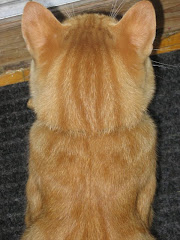
I'm now a full- fledged empty nester since my son and daughter have flown the coop to seek their fortunes around the world and my husband has decided to follow his, with another woman. So, since last January, Beowulf, my cat has been my sole companion through the long, cold and seemingly eternal winter.


Despite his name, Beowulf is a very friendly and affectionate domestic tiger who sleeps at the foot of my bed and lies on guard at the door whenever I take my showers. Pets, nevertheless, are a different kind of 'children' to whom we divert all our affections in the absence of our own.


I ponder on Khalil Gibran's words:

“Your children are not your children.
They are the sons and daughters of Life's longing for itself.
They come through you but not from you,
And though they are with you yet they belong not to you.”


Naturally, there comes that time in life to let our children fulfill Life's longing for itself. If we have done a fairly good job in raising them, they'll come back to us and to the unconditional love we carry for them.


A life partner's departure, on the other hand, is not as readily acceptable- especially when there's no rhyme or reason any poet or philosopher can explain. So we call such events mid-life crisis, marital-breakdown or downright betrayal.


I was getting tired of living as a betrayed wife when Life presented me with its will to go on through nature. The jasmine-scented mock orange blossoms outside the front door, the heady perfume of lilacs in the backyard, the greening of new grass made me realize that life goes on and I have to keep pace.


Last Sunday I found a dazed, young bird at my doorstep. It couldn't fly in spite of desperate attempts. I knew that it would be fair game for the neighborhood cats and took him in. Since I don’t have a bird cage - I placed him in Beowulf's pet taxi― the carrying case we use when Beowulf goes to his veterinary visits. I gave him water, flax and sesame seeds, a few grapes and a furry toy.


Nursing a fragile, helpless creature back to health with loving words and soothing music, as well as nourishment and care evoke nostalgic feelings in me. I don't know much about birds, but searching on the Internet, I discovered that this was a baby starling with a black mark on his bill (as opposed to pink) indicating that he is a male. Beowulf and I decided to name our battered guest, Billy


Beowulf was joyous and curious like a toddler who just got a baby brother ; and wanted to play with him immediately. I had to be watchful that he didn't topple the pet taxi or reach in too far with his claws and harm Billy. Yet watching his feline curiosity and the wonder on his face, the futile attempts of his cat reasoning, his question-laden "meow"s brought me much laughter and amusement -something I haven't had for a while.

When I met my husband, he was like Billy: lost, battered and ruffled, albeit not by flying into a wall but by its equivalent in human terms. During our life together he did find love, happiness, trust; and regained his self-confidence and self-esteem through my unconditional love and nurturing. Once he could hold up his head and put a past he hid from me behind, he didn't seem to need me any more and took off leaving behind a few feathers ― souvenirs of his existence. This is not the way it was supposed to be, but life doesn’t always turn out the way we plan and hope it will.


Letting Bill, the love of my life, go has been very painful and difficult.


Letting Billy, the bird, go should be easier. I'll take care of him until he too heals, and then I'll set him free into his own world and mingle with his peers among the mulberry branches or feast on the ripening fruits in my backyard. I've always had a spot for birds, because for me birds symbolize not only a delicate vulnerability, but also a much coveted freedom and soaring of the spirit.


My Father used to call me 'Saint Füsun of Brossard' after Saint Francis of Assisi, the patron Saint of birds, for I always leave food out for them in winter and summer.

Birds can ascend in a heartbeat and command a 'bird's eye' view of life; they see what I cannot. They are beautiful, fragile, sing joyful songs and soothe my soul. But they are vulnerable in spite of their free, independent, restless spirits. They give without knowing : the mulberry tree whose fruits and tall beauty I enjoy from the window when I write at my desk is a gift from the birds- a seed dropped right there from a bill- and that grew into a tree bearing edible fruit ! So is the grapevine that has been growing along the fence and whose leaves I have harvested many times to make delicious wine leaves stuffed with rice, pine nuts, cinnamon and mint.


* * * * * *


Billy regained his health last Friday. I could almost taste his yearning to try his wings again and discover the blue skies. Beowulf, during this time had turned from a feline with hunter instincts into a protective older brother. Or maybe he made me believe that because I never left the two unsupervised. In any case, it was time to let go ― once more...


With Beowulf following my every step, I carried the pet taxi to the back yard and opened the metal grid door. Billy paused briefly. Then, like a plane soaring into the vast skies, he took off and alighted on the tip of a pine branch where two larger starlings joined him immediately. Briefly after, all three flew into a glorious sunset, while Beowulf turned into a typical feline once again and dashed after them. But I knew he’d never catch up to them, and Billy would be fine now.


Billy is back !


Billy (the bird) is back! A day after I released it, I saw Beowulf and Al (an all- white street cat I named Al-short for Algarth) playing in the backyard. Now, these two usually hiss at each other, but this time they were behaving like two hockey players on the same team chasing after a puck ! Well, the puck turned out to be Billy, trying to hop to safety for his delicate life. I was thunderstruck ! I dropped everything (including a slipper) and stormed out. Beowulf had purposely turned deaf to my admonishments and raced me to the raspberry bush where Billy made one final hop and vanished among the leaves.

Instinct and desperation propelled me into the bushes groping for the battered creature. When I found it, his heart was racing with fear and its wing feathers were out of kilter. I felt terribly guilty for having released it prematurely, believing it would be alright. Perhaps I had acted out of my personal, wishful thinking rather than treading with reason. I could only pray that he would survive.

Billy has been recuperating ever since, and pecking at the mulberries I gather from the tree his ancestors bestowed in my yard. It has been a challenge to keep Beowulf away from his shelter; but these are the kind of challenges which bring me happiness.

There's rain in the night air and the International Fireworks have started. I hear their boom at a distance from my open window through which waft in floral fragrances from my Chinese neighbor's yard. Beowulf is back from his night's outing, getting ready for his deep slumber after chasing birds and butterflies all day. Billy is safe and slowly recovering. I feel I'm ready to retire myself with a book and some music until my eyelids feel heavy with sleep.

When I lay down my book and turn off the lights, I'll thank for all the things I have and say a prayer for the battered Billies of the world.

Not long ago, I was one of them.


Copyrighted material ! All rights belong to Füsun Atalay ~ Copyright © 2008